
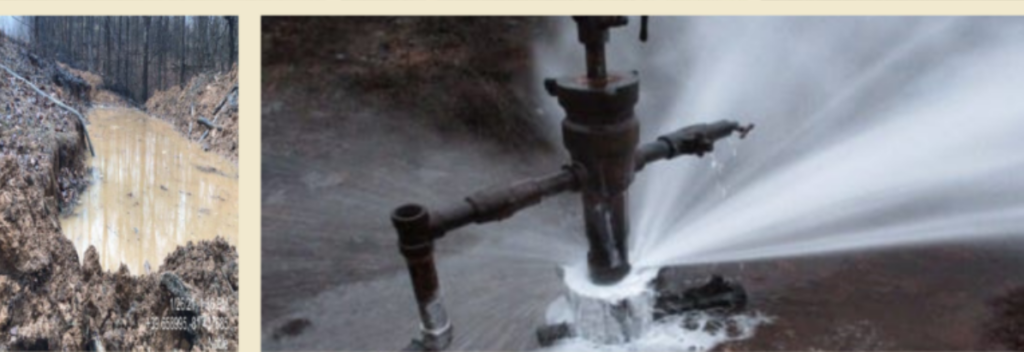
In a recent op-ed published in Ohio Capital Journal, Marietta College petroleum geologist Dr. David L. Jeffery explains why the Washington County injection well crisis demands an emergency response. Pressure readings indicate that radioactive oil and gas waste has moved out of the deep rock layer meant to contain it and into shallower gas wells, putting drinking water at risk.
“The governor should declare a state of emergency in the impacted part of Washington County” Jeffery wrote.
The problem starts with the geology:
“Safely injecting it underground requires rock that is deep, porous, and sealed off from drinking water and the surface. This means a reservoir with room for the waste, a trap to keep it enclosed, and a seal that ensures it cannot escape.
“In Washington County, those basic conditions do not appear to exist, and the consequences are now measurable.
“The evidence indicates there are fractures allowing the injected wastewater to flow up into shallower layers and to the surface.
“What’s unfolding in Southeastern Ohio is a manmade geological disaster, and it is getting worse.”
Pressure records show how serious the problem has become. Jeffery writes that pressure in some gas wells tapping the Berea Sandstone rose from about 50 to more than 350 pounds per square inch in under a year. Producing gas wells should lose pressure as they age, not gain it. Tests indicate that fracking waste has entered more than 100 gas wells, some more than five miles from the injection sites. Jeffery also warns that the fresh water aquifers at risk supply drinking water to more than 100,000 people in Ohio and West Virginia.
He then turns to what the state should do next:
“First, take control of the pressure. The state needs to take over both the injection wells and the invaded gas wells and begin actively drawing fluids out.
“Pulling pressure down creates a low-pressure sink that draws contaminated fluid back away from the surrounding aquifers and producing wells, stranding it before it can migrate further.
“Second, protect the drinking water. This is the piece that should alarm everyone, because it isn’t a local problem — it’s a regional one.”
Read Dr. Jeffery’s full op-ed in the Ohio Capital Journal.
Dr.Jeffery’s analysis supports concerns raised by local well owners, residents, water officials, elected leaders, community advocates, and BEN. BEN began organizing around injection wells and brine migration in Washington County about sixteen months ago. On June 23rd, BEN released a report showing pressure increases of more than 1,000 percent in some wells near Redbird #4. At a July press conference, Jeffery joined well owners, water officials, community advocates, and elected leaders in calling for a broad, long-term study of brine migration across southeastern Ohio.
Within days of BEN’s report, ODNR asked the operators of four Class II injection wells to stop operations.The operators agreed, but the state has not begun the long-term study the community has asked for. BEN continues to call on ODNR to suspend injection in the area, track pressure at every well with a history of problems, and test private water wells within at least five miles of any injection well suspected of leaking.
Learn more about the Redbird #4 crisis and the community response, or read how sixteen months of organizing helped stop four injection wells.